

The B2E market is emerging as one of the most relevant strategic levers for companies. According to IMA Europe research, it’s the incentive destination market with the most optimistic growth expectations. Companies that invest in flexible, people-centric programs are building a lasting competitive advantage.

Employee reward is no longer just an HR topic. It’s increasingly becoming a priority that involves all levels of corporate management. According to the IMA Europe 2025 study, the B2E (Business to Employee) segment shows the most optimistic growth expectations among all incentive destination markets: 75% of European operators foresee its expansion in the coming years, with a benchmark score of 86 points, outperforming both the B2B market (83) and the B2C market (80). This is not an isolated case. It reflects a deeper transformation in how companies view their employees: no longer simply resources to manage, but individuals to engage, retain, and empower through concrete tools.
What is the B2E (Business to Employee) market?
The B2E market includes the set of tools, platforms, and services through which companies deliver value to their employees: from corporate benefit programs to reward & recognition solutions and digital engagement platforms. These are not merely HR initiatives, but an increasingly structured system that directly impacts productivity, retention, and the ability to attract talent. In this context, employees are no longer just the recipients of internal policies but become true “users” of corporate experiences, with expectations of simplicity, personalization, and immediacy. This ecosystem drives value creation across all directions: for the company, which optimizes its reward budget; for the employee, who gains access to a network of retailers they already interact with in daily life; and for brands, which can reach workers in their dimension as consumers, amplifying their perceived value. It’s precisely this connection with the retail world and real consumption that makes employee reward a concrete and meaningful engagement tool.

A fast-growing ecosystem
It’s difficult to define the exact size of the B2E market, as it is not a single industry but an ecosystem where HR tech, corporate welfare, and reward converge, along with all their related components, which are growing rapidly and in parallel. For example, the reward & recognition segment alone is expected to reach $48 billion by 2035 (Future Market Insights), while the employee engagement software market is growing at double-digit rates, exceeding 15% annually (Fortune Business Insights).
This convergence is what makes B2E one of the most dynamic areas within modern organizations: platforms become the infrastructure, while benefits and rewards represent the value layer that drives the employee experience.
Generations matter. Standard programs are no longer enough
One of the most significant insights from the IMA Europe 2025 research concerns not only market growth, but its internal complexity. 60% of European executives acknowledge significant differences in incentive preferences across generations: Baby Boomers, Gen X, Millennials, and Gen Z coexist within the same organizations, with expectations and priorities that are often far apart. A one-size-fits-all reward program is not just less effective: it’s perceived as distant. This distance, in terms of engagement, has a measurable cost. Companies that can offer flexibility, personalization, and freedom of choice will build a real competitive advantage, not only in attracting talent but also in retaining it.
What this means for employers
Employee reward is no longer an exclusively HR matter. It’s becoming a topic that involves all levels of management, because its effects directly impact business results. Companies that have already structured flexible, people‑centric reward programs are widening the gap compared to those that have not yet taken action, and that gap grows every year. Across European markets, the regulatory landscape increasingly supports investment in structured employee benefit programs, making this a concrete opportunity to redefine the relationship between employer and employee.
How Amilon responds: a tailor‑made ecosystem
Amilon has developed a product ecosystem designed to address this scenario at every stage of a company’s journey, following a progressive logic: from immediate flexibility to a proprietary platform, all the way to direct access without intermediaries. Each level is designed for a different stage of reward program maturity: companies starting from scratch, those looking to scale, and those with a clear vision who want to build a fully proprietary experience.
The direct access solution
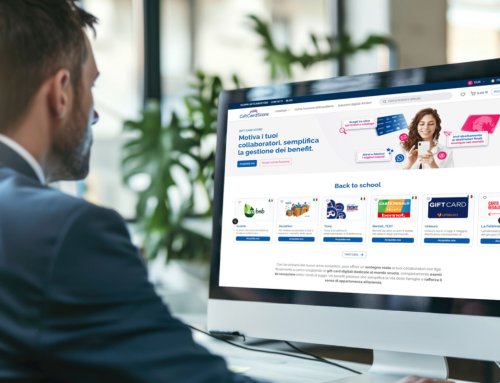
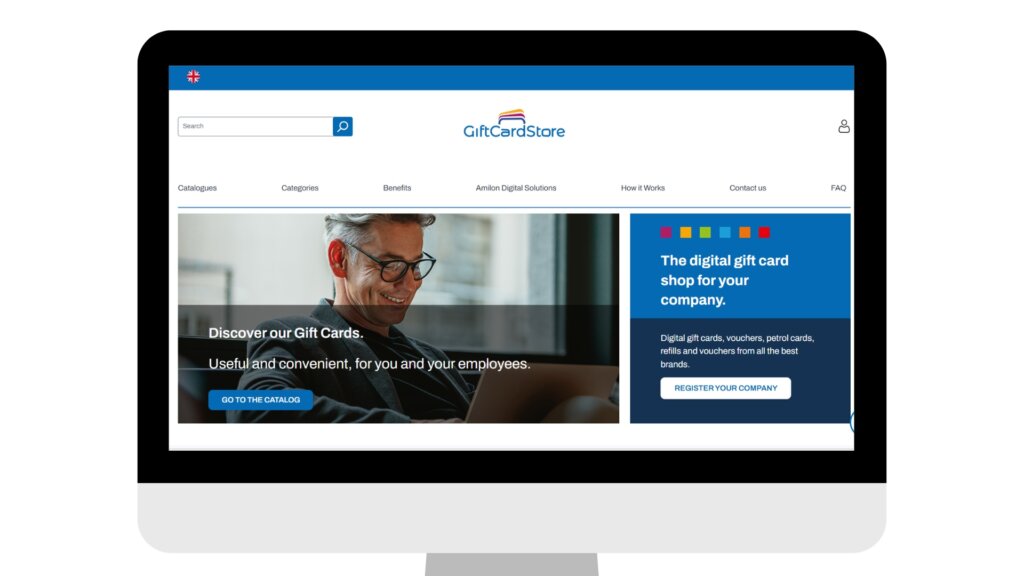
The GiftCardStore is the B2B e-commerce platform that allows companies to purchase gift cards and digital rewards independently, without intermediaries, in just a few clicks. An immediate gateway to the world of digital reward, designed also for SMEs that want to structure a benefit plan without managing a complex project.
For those who want to build a brand relationship with their people
ideaShopping Tailor Made is the answer for organizations that want to go beyond simple benefits and build a branded reward app or platform: logo, colors, customized catalog, dedicated URL, management back office, and API integration with existing HR, welfare, and CRM platforms. It is the solution for those who understand that reward is not a cost, but an investment in relationships with people.
The signal is clear. The question is when to act
The B2E market in Europe is growing. Across all major markets, structured reward programs are already a strategic driver for talent retention, expected by workers across all generations. Companies that have invested in flexible, personalized reward programs are already seeing results in terms of engagement, reduced turnover, and employer attractiveness. Others will need to start as soon as possible, because the gap widens every year.
Want to understand which solution best fits your organization? Contact us and let’s design your Business to Employee program together.